


-
The Unemployed Mind: Pakistan’s Unemployment Problem Explained
Written by Rabab Khan
To give the country credit, Pakistan is one of the few countries in the world to not obey the Okun’s Law which observes a ~2 percent decrease in GDP for every percent increase in unemployment.
-
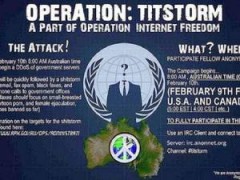
Operation: Internet Freedom
Written by Yassmin
The Stop Online Piracy Act, SOPA. The Protect Intellectual Property Act, PIPA. The ISP based Australian Internet filter, the Cybercrime Legislation Amendment Bill 2011 enforced by the Australian Communications and Media Authority. These are a few examples of many governments’ attempts, both within Australia and internationally, to fight what they see […]
-

Real Estate-Oriented Tourism Threatens Mediterranean Coastlines
Written by Mehdi Lbadikho
In the following, “real estate-oriented tourism” means any tourism strategy that consists of encouraging people to buy real estate as a secondary residence. In her article “The Great Land Rush”, Arrianna Marie Coleman alerts us to the fact that small farmers are the first to suffer from new land deals […]
-
Natural Disasters and the Risk of Violent Civil Conflict
Written by Mario Wiedemann
Does the occurrence of a natural disaster such as an earthquake, volcanic eruption, tsunami, flood, hurricane, epidemic, heat wave, and ⁄ or plague increase the risk of violent civil conflict in a society? This study uses available data for 187 political units for the period 1950–2000 to systematically explore this question […]
-
The Open Society Assesses Its Enemies: Shocks, Disasters and Terrorist Attacks
Written by Mario Wiedemann
This paper conducts a first systematic investigation of the determinants and costs of terrorism attacks at the aggregate level. We use newly assembled datasets on terrorism attacks, natural disasters and bank and currency crises to answer three questions: what are the determinants of terrorism incidence, is there an output cost […]
-
The Political “Economy” of Natural Disasters
Written by Mario Wiedemann
Natural disasters occur in a political space. Although events beyond our control may trigger a disaster, the level of government preparedness and response greatly determines the extent of suffering incurred by the affected population. We use a political economy model of disaster prevention, supported by case studies and preliminary empirics […]