


-

The Illusion of the Welfare State
Written by Josh Grundleger
Western cultures have developed an illusion of the welfare state. The US and Europe must correct this cultural misperception of what a welfare state can and cannot accomplish before they can successfully address its economic problems.
-

Crossing Borders For Health: Mexico and the USA
Written by arzaba
When you consider what nations have the most effective health care systems, most Mexicans think of countries like Cuba, where the welfare state provides comprehensive general medicine, or France, where the complete health care system is mostly financed by a governmental national health insurance. Their home country of Mexico hardly comes to mind. […]
-

Reclaim your city!
Written by Luis Felipe Morgado
Internet is a promising tool in the strengthening of democracy, thanks to its potential to foster more participation in public affairs. In Rio de Janeiro, a project called Meu Rio is empowering citizens to voice their opinions with respect to local politics, in a non-partisan perspective.
-
Ghana: Women’s Work
Written by Fui
One of the most widely-heralded developments of recent decades has been the growing participation of women in the workforce. In the developing world, some research suggests that this can be one of the strongest drivers of economic growth. In the developed world, it is an increasing necessity as populations shrink […]
-

Does the Military Have a Gender?
Written by Kinga Szálkai
The Military: A Male Institution by Definition “The military, the defence forces have no gender. Military only has power, the capability to fight, authority and social prestige. The unity of the defence forces does not know gender or age. There are female soldiers and there are male soldiers. Professional competence, […]
-
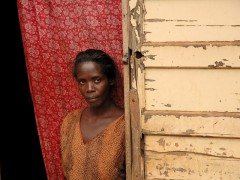
Ugandan Women On The Move
Written by Mubatsi
World over, women have always worked. But most of their work has been unrewarded. Yet, women too contribute to economic growth. In Uganda, women work as smallholder farmers, school teachers, domestic workers, chief executives, politicians, nurses, volunteers, doctors, taxi drivers, mothers, carpenters; child care workers, and business owners among others. […]