


-
Roses are Red, but I am Blue: Reflections from Bosnia after International Women’s Day
Written by Velma
After surviving a war and struggling through university while living away from home in Sarajevo without financial support, I thought I had finally made it to somewhat safer ground when I was hired to work at a state institution in the Bosnian-Herzegovinian educational sector. I was excited and hopeful because […]
-

Pay equality in France … how French women see changes coming in 2013
Written by alexleggett89
What is the place of working women in France in 2013? The influence of women continues to be recognised as International Women’s Day on 8 March provides an opportunity to reflect on the achievements of women and the challenges they have faced in history and will face in the future […]
-
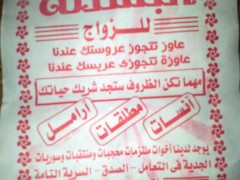
Refugee brides: the bounties of war
Written by Rayna Stamboliyska
“There are many who don’t wish to sleep for fear of nightmares. Sadly, there are many who don’t wish to wake for the same fear.” (Richelle Goodrich) It’s two years now since the Syrian people first took to the streets to protest against the dictatorial iron fist of Bashar Al-Assad. […]
-
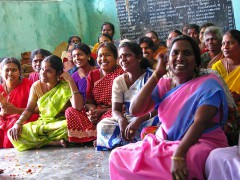
Female leadership is vital for Indian economic and social development
Written by Geeta Ramakrishnan
The famous Lebanese philosopher Charles Malik once said, “The fastest way to change society is to mobilize the women of the world.” This thought is more relevant than ever in the 21st century when nations across the globe are discovering the critical contribution women make to building communities and driving […]
-

The Intervention: From Dreamtime to Nightmare
Written by Dominika Ricardi
“You cannot drive change into a community and unload it off the back of a truck. That is the lesson of the Intervention.” —Northern Territory Emergency Response Review Report, 13 October 2008, p58 In 2007, the Australian federal government called in the military to intervene in the Northern Territory to […]
-

Forró music – an arena for the gender discussion?
Written by João Miguel Lima
The musical genre forró is particularly popular in the states of Northeast Brazil, with themes that range from enduring the harsh semiarid land to praising the “playboy lifestyle” through its more recent electronic beat. Relations between men and women in the region arise from the lyrics, and one song in particular has been critical to stress the value of independent working women.